If your legs feel heavier, more swollen, and more tired in July and August than they do the rest of the year, you are not imagining it. The seasonal pattern is real, and there is a physiological reason for it. Summer heat, combined with humidity and the amount of time most people spend on their feet during warmer months, creates a set of conditions that make venous symptoms noticeably worse. For people with mild venous insufficiency, symptoms that were manageable in the winter become harder to ignore. For people with more established vein disease, the summer months can be the hardest stretch of the year.
This article explains why heat affects your veins the way it does, which signs are worth paying attention to, and why summer, counterintuitively, is one of the more practical windows to address the underlying condition.
What Heat Actually Does to Your Veins
Your veins are not rigid tubes. They are muscular structures that expand and contract in response to temperature, hormones, hydration status, and pressure. In warm weather, veins dilate. This is a normal physiological response that helps the body cool itself by moving warm blood closer to the skin surface, where heat can be released.
In healthy veins, this dilation is temporary and reversible. The valves inside the veins continue to function normally, blood keeps moving upward against gravity, and the vein returns to its baseline size when the temperature drops.
In veins that are already weakened, particularly those affected by chronic venous insufficiency, the dilation is more problematic. The valves in these veins are not closing properly to begin with. When the vessel wall expands under heat, the valves are stretched further apart and become even less effective at stopping backward flow. Blood pools more readily. Pressure inside the vein increases. And the tissue around the vein absorbs more fluid than it can drain, leading to the swelling, heaviness, and aching that people describe as the summer version of their symptoms.
This is why patients often notice that their compression stockings, which felt tolerable in the winter, become uncomfortable in the summer. The stockings are working harder because the underlying pressure is higher. It is also why elevating the legs at the end of the day produces such noticeable relief in the summer months. Lying flat removes the gravitational load that has been contributing to the pooling all day.
The Houston Factor
Heat is one variable. Humidity is another. When ambient humidity is high, the body has a harder time releasing heat through evaporation, and blood remains close to the skin surface for longer. Combined with prolonged periods of standing outdoors, sitting in vehicles, or working in poorly ventilated spaces, the total daily load on the venous system in Houston is meaningfully greater than in cooler or drier climates.
Add dehydration, which is more common in the summer than most people realize, and the venous system is working under conditions that would not exist in the same way at other times of the year. Dehydrated blood is thicker and moves less efficiently through the veins. The calf muscle pump, which relies on hydration to function properly, becomes less effective at pushing blood back to the heart.
None of this is dramatic in isolation. It is the accumulation over weeks of Houston summer conditions that turns tolerable venous insufficiency into a condition that starts to noticeably affect quality of life.
The Signs That Get Worse in Summer
Heaviness by Mid-Afternoon
The most common warm-weather change is a dull, dragging heaviness in the legs that starts earlier in the day than it does in the winter. If your legs used to feel this way at 6 or 7 p.m. and now feel this way by 2 or 3 p.m., that is a sign that venous pressure is elevated more than it usually is. The heaviness itself is not new. The timeline is.
More Persistent Ankle Swelling
Mild swelling that appeared briefly in the winter often becomes more consistent in the summer. Sock lines that used to fade in an hour take three or four hours to go away. Shoes that fit fine in the morning feel tight by mid-afternoon. Ankles look thicker at the end of the day even when nothing about your activity level has changed.
Night Cramps and Restless Legs
The mechanism connecting venous disease to disturbed sleep is not fully understood, but it appears to relate to metabolic byproducts that accumulate in the leg tissue when venous return is poor. In the summer, when venous return is under greater strain, these cramps and the restless sensation that makes it hard to settle at bedtime often become more frequent.
Visible Vein Changes
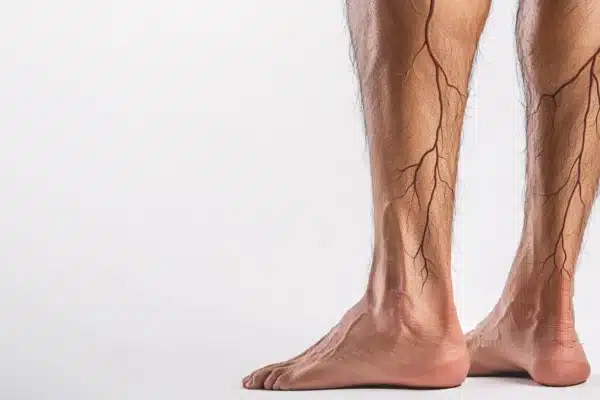
Veins that were subtle in the winter often become more prominent in the summer. Part of this is that people wear less clothing and see their legs more often. But part of it is genuine: dilated veins do bulge more visibly, and the increased pressure inside them makes them look and feel different. If you notice a vein that has changed shape, become tender, or feels warm to the touch, that is worth mentioning to a vein specialist rather than waiting to see whether it settles down.
Skin Discoloration Around the Ankles
Chronic venous pressure over time causes changes in the skin around the ankles and lower calf. The skin can darken, thicken, or take on a leathery texture. In the summer, when venous pressure is elevated, these changes can appear or worsen more quickly than they do the rest of the year. This is a sign that the venous disease has progressed to the point where it is affecting tissue integrity, and it warrants earlier evaluation rather than later.
Why Summer Is a Practical Window to Seek Treatment
The instinct with venous symptoms is often to wait. Wait for the season to change. Wait for the heaviness to ease. Wait to see whether it gets bad enough to warrant doing something. And for the specific summer flare, that instinct can seem reasonable. The heat will pass. The symptoms will ease.
But the underlying condition does not ease. Venous insufficiency is progressive. The valves that are allowing blood to pool do not repair themselves. Each summer that goes by, the veins are under a bit more strain than the summer before. Each summer that ends without evaluation is another year the condition has to advance quietly.
Summer is, counterintuitively, one of the more practical windows to address vein disease for several reasons.
First, most modern vein treatments are outpatient. There is no hospital stay and no general anesthesia. The procedure is performed through a pinhole in the leg using image guidance, the diseased vein is closed from the inside, and blood is naturally redirected to healthy veins. Most patients return to normal activity within 24 to 48 hours. This kind of recovery timeline fits well around summer schedules, including family vacations and travel plans, without requiring extensive planning around downtime.
Second, most patients have already met a meaningful portion of their annual insurance deductible by mid-year. Scheduling treatment now often means lower out-of-pocket costs than waiting until the following January, when the deductible resets.
Third, starting treatment in the summer means the veins have time to fully respond before fall. Improvement is not immediate, most patients notice gradual reduction in symptoms over the following weeks as the treated vein closes and blood flow adjusts. Starting now means the changes are meaningfully complete by the time holiday travel, family gatherings, and end-of-year plans begin.
Fourth, insurance coverage decisions and prior authorization can take several weeks to work through. Beginning the evaluation process now means the treatment itself is scheduled at a comfortable pace rather than rushed against a deadline.
What a First Evaluation Actually Involves
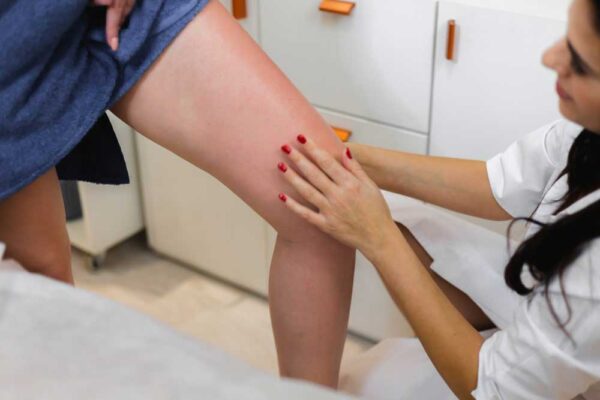
A first visit at LPVI is a conversation, not a procedure day. You describe what has been going on with your legs, when the symptoms started, whether they follow a pattern, what makes them better or worse. If a venous ultrasound is warranted, it is performed in the office as a straightforward, painless scan that maps the venous system and identifies which veins are involved.
Dr. Bilal Anwer reviews the imaging personally. He is a dual board certified Vascular and Interventional Radiologist, which means he reads and interprets his own diagnostic imaging rather than relying on a report from another specialist. He walks through what the scan shows, explains whether minimally invasive treatment is appropriate for your specific case, and answers your questions without a fixed appointment length pressuring the conversation.
If treatment is a good fit, the team handles insurance verification and prior authorization before your procedure date is confirmed. You walk in knowing what is covered, what your out-of-pocket cost will be, and what to expect during and after the procedure.
There is no obligation to schedule treatment on the day of your consultation. Whether you move forward is your decision, on your timeline.
What You Can Do This Summer, Regardless of Whether You Seek Treatment
Some practical steps that reduce venous strain during the hottest weeks of the year, whether or not you have decided to see a specialist yet.
Elevate your legs above the level of your heart for 15 to 20 minutes twice a day. Even brief elevation makes a measurable difference in fluid accumulation.
Wear compression stockings when you know you will be on your feet or seated for long stretches. Graduated compression, tightest at the ankle and looser toward the knee, supports venous return most effectively.
Stay well hydrated. Dehydration thickens the blood and reduces the efficiency of the calf muscle pump. Water is more effective than sugary or caffeinated drinks for this purpose.
Walk when you can. Consistent, moderate walking activates the calf muscles and supports venous return more effectively than short bursts of exercise followed by long sedentary periods.
Take breaks from prolonged standing or sitting. Even shifting your weight or taking a few steps every hour makes a difference over the course of a day.
These measures manage the strain. They do not fix the underlying condition. But during a summer where symptoms are hitting harder than usual, they can meaningfully reduce daily discomfort while you decide whether to pursue evaluation.
Getting Evaluated in Houston
Dr. Bilal Anwer is a Stanford Fellowship trained and CAQ Board Certified Vascular and Interventional Radiologist with over 10 years of experience treating vein disease at Leg Pain and Vascular Institute. He reviews every patient’s ultrasound imaging personally before recommending any treatment, and consultations are thorough and unhurried.
No referral is needed to schedule an appointment. Most major insurance plans are accepted, including Medicare, BlueCross BlueShield, Aetna, Cigna, United Healthcare, and Humana. Same-week appointments are available at both the FM 1960 and Webster locations.
If your legs have been telling you something all summer, this is a practical moment to find out what.
Contact Dr. Anwer’s team here.
This information is not a medical diagnosis. A consultation with Dr. Anwer will confirm your treatment options. Individual results may vary.
This information is not a medical diagnosis. A consultation with Dr. Anwer will confirm your treatment options. Individual results may vary.