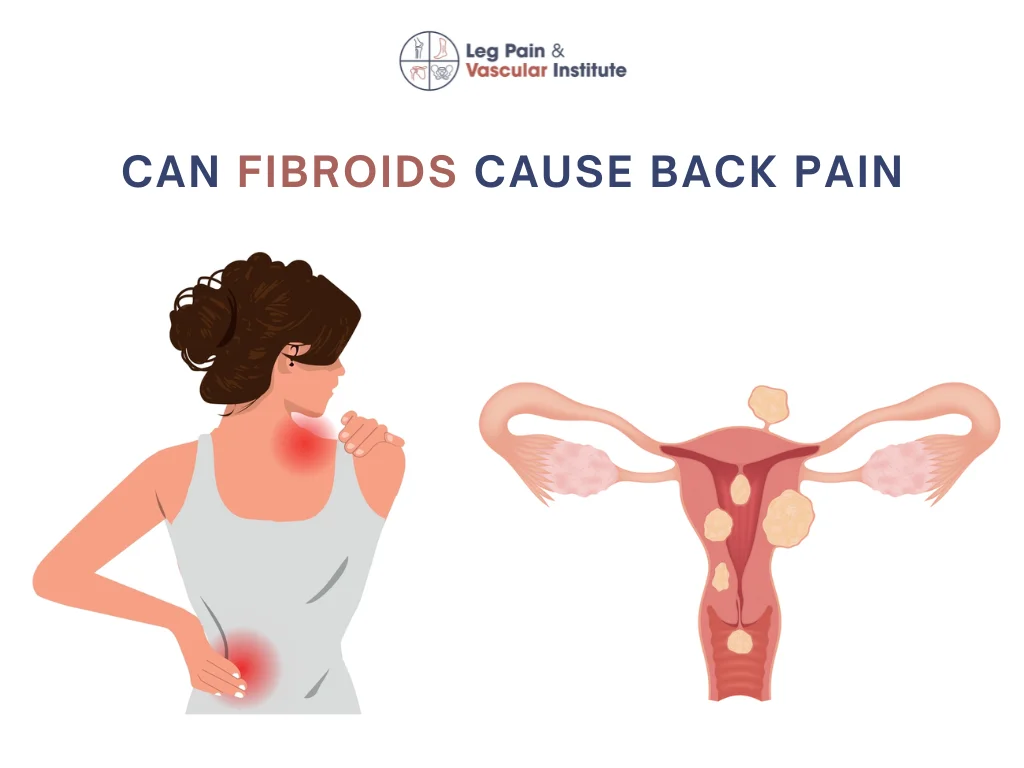
Yes, uterine fibroids can cause back pain, especially lower back pain and pelvic pressure symptoms, when they grow large or are located toward the back of the uterus. In some women, this discomfort is due to pressure on spinal nerves, pelvic muscles, and surrounding organs. Research and clinical reports show that fibroids can act as pain generators beyond the pelvis, producing symptoms that mimic musculoskeletal or nerve‑related back pain. Accurate diagnosis and appropriate treatment, including minimally invasive procedures like uterine fibroid embolization (UFE) offered at Leg Pain Clinic in Houston and Baytown, can provide significant relief.
Understanding Uterine Fibroids and Back Pain
Uterine fibroids are noncancerous tumors that develop from the muscle tissue of the uterus. They vary in size, from tiny growths detected only on imaging to large masses that distort the shape of the uterus. While many fibroids cause no symptoms at all, others can lead to pressure‑related discomfort that includes back pain, especially in the lower back.
The symptoms a woman experiences often depend on:
- Size of the fibroid
- Location within the uterus
- Number of fibroids present
Fibroids positioned closer to the back of the uterus (posterior fibroids) are more likely to exert direct pressure.
Can Uterine Fibroids Cause Lower Back Pain?
Yes, uterine fibroids can cause lower back pain, particularly when they grow large or develop posteriorly. Studies and clinical observations report that a significant proportion of women with fibroids experience pressure symptoms, including lower back pain, pelvic discomfort, and non‑cyclical pain not directly tied to menstruation.
How Fibroids Cause Back Pain
1. Anatomical Pressure on Nerves
Fibroids located toward the posterior (back) wall of the uterus can compress the lumbosacral plexus or nearby nerve roots. This pressure may produce sensations of aching, discomfort, or even radiating pain in the lower back region.
2. Musculoskeletal Disruption
Large fibroids can alter the normal shape and weight of the uterus, stretching connective tissues and pelvic muscles. This shift may lead to postural strain and referred pain in the back.
3. Inflammatory Response
Fibroid growth sometimes triggers localized inflammation. Inflammation near pelvic structures may sensitize surrounding nerve endings, intensifying pain signals perceived in the back and pelvis.
Symptoms of Fibroid‑Related Back Pain
Women with symptomatic fibroids may experience:
- Persistent lower back pain or aching pressure
- Back pain that is unrelated to physical activity or musculoskeletal strain
- Pain that worsens with prolonged standing or sitting
- Discomfort that may radiate toward hips or down the legs
- Associated pelvic symptoms such as bloating, pelvic fullness, or heavy menstrual bleeding
Many women initially seek back pain care before realizing the root cause relates to fibroids. This highlights the importance of considering uterine fibroids in differential diagnosis when back pain is accompanied by pelvic or menstrual symptoms.
Diagnosis: Linking Fibroids to Back Pain
A proper diagnosis involves both gynecologic and back pain evaluation:
Clinical Evaluation
- Comprehensive patient history (pain pattern, menstrual symptoms)
- Physical pelvic examination
Imaging Studies
- Ultrasound — first‑line tool to detect fibroids and assess size
- MRI — detailed imaging to map fibroid location, size, and relation to adjacent nerves and tissues
These studies help clinicians determine whether back pain correlates with fibroid presence and whether other causes (e.g., spinal disorders) might be involved.
Treatment Options for Fibroid‑Related Back Pain
Managing fibroid‑related back pain focuses on addressing both pain and the underlying fibroid growth.
Conservative Approaches
- Pain medication (e.g., NSAIDs) for temporary relief
- Physical therapy targeting posture and muscle strain
- Hormonal therapies to reduce bleeding and suppress fibroid growth
While these methods may relieve symptoms, they generally do not eliminate fibroids and may not fully resolve back pain.
Minimally Invasive Treatment: Uterine Fibroid Embolization (UFE)
UFE is a procedure that blocks blood flow to fibroids, causing them to shrink progressively over time. As fibroids decrease in size, pressure on surrounding nerves and tissues lessens, often resulting in significant improvement in back and pelvic pain.
Patients in Houston and Webster seeking specialized care for fibroid‑related back and nerve pain can access uterine fibroid embolization (UFE) at Leg Pain and Vascular Institute in Houston and Webster. This treatment offers:
- Uterus‑sparing, non‑surgical approach
- Short recovery time
- Reduction in size of fibroids that contribute to back pain
When to Seek Medical Evaluation
You should consult a healthcare provider if:
- Back pain is persistent, worsening, or disrupts daily living
- Back pain is accompanied by menstrual changes, heavy bleeding, or pelvic pressure
- Pain does not improve with conventional back or muscular treatments
- There are symptoms like leg numbness, pelvic heaviness, or gastrointestinal or urinary changes
Early evaluation ensures accurate diagnosis and allows for treatment planning that can greatly improve quality of life.
Frequently Asked Questions
Can uterine fibroids cause back pain?
Yes, clinically and scientifically, uterine fibroids can contribute to lower back pain through nerve compression and pressure effects. Recognizing this link is essential for accurate diagnosis and treatment, particularly for women in Houston and Webster seeking specialized care. Minimally invasive options like uterine fibroid embolization (UFE) at Leg Pain and Vascular Institute in Houston and Webster can significantly reduce back pain and improve quality of life when fibroids are identified as the contributing factor
Can uterine fibroids cause back pain?
Yes. Uterine fibroids can cause back pain, especially lower back pain, when they press on nearby nerves or tissues. Fibroids located toward the back of the uterus are most likely to contribute to back discomfort.
Do uterine fibroids cause lower back pain?
Yes. Lower back pain is commonly reported by women with uterine fibroids, particularly if the fibroids are large or positioned posteriorly, exerting pressure on surrounding structures.
How are fibroids linked to back pain symptoms?
Fibroids can cause back pain by compressing spinal and pelvic nerves or by creating pressure on muscles and ligaments that support the pelvis and lower spine.
Can treating fibroids relieve back pain?
Yes. Treatments that reduce fibroid size, such as uterine fibroid embolization (UFE) or surgical removal, often decrease back pain by relieving pressure on nerves and tissues.
This information is not a medical diagnosis. A consultation with Dr. Anwer will confirm your treatment options. Individual results may vary.