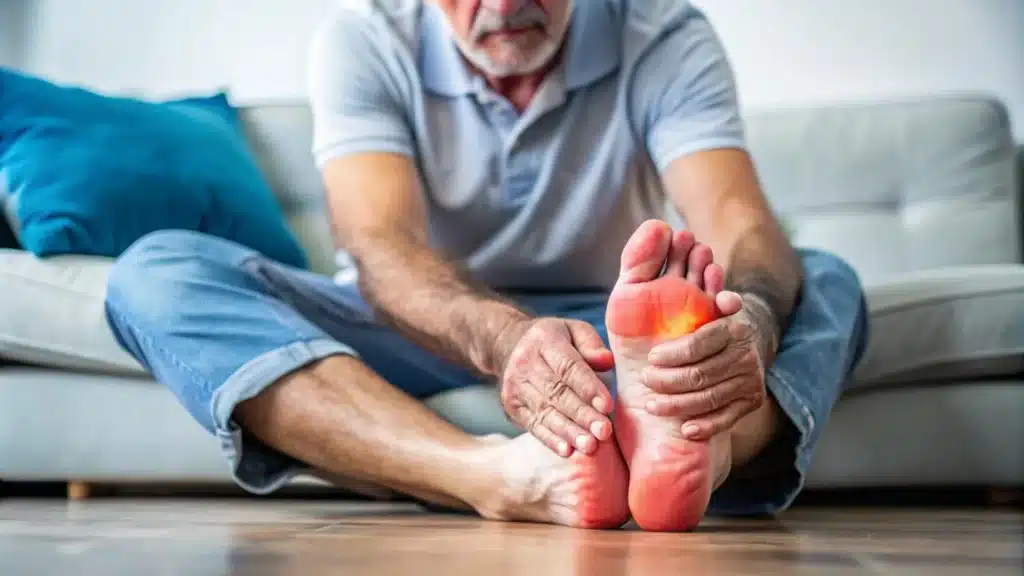
Numbness in the feet. A persistent tingling or pins-and-needles sensation that does not go away. A burning or aching pain that tends to be worse at night. Feet that feel cold even in warm conditions. A strange feeling when walking, as though the ground beneath you is not quite solid.
If these symptoms sound familiar, you have likely been told you have peripheral neuropathy. You may have been managing it for months or years. And you may have noticed that the relief from treatment has never been quite complete.
There is a reason for that, and it is one that many patients are never told about.
For a significant proportion of people with peripheral neuropathy, particularly those with diabetes or known circulation problems in the legs, there is a vascular component contributing to nerve symptoms. When the arteries supplying the legs and feet become narrowed, the peripheral nerves are gradually deprived of the oxygen and nutrients they need to function properly. The nerve symptoms that result are real and measurable. But they are being driven, at least in part, by a circulation problem rather than the nerves alone.
That distinction matters more than it might seem, because the way neuropathy is treated depends entirely on what is causing it.
What Is Peripheral Neuropathy?
Peripheral neuropathy is a broad term that describes damage or dysfunction in the peripheral nerves, the nerves that run from the brain and spinal cord out to the limbs and organs. When these nerves are not functioning properly, they produce a range of sensory symptoms depending on which nerves are affected and how severely.
The most common presentation involves the feet and lower legs, producing symptoms that typically start at the tips of the toes and gradually work upward. The sensation is often described as numbness, tingling, or a burning pain. Some patients experience hypersensitivity, where even light touch to the feet feels uncomfortable. Others experience a loss of sensation, where they can no longer feel temperature or pain reliably in their feet.
Peripheral neuropathy has many potential causes. Diabetes is the most common, accounting for a large proportion of cases. Other causes include vitamin deficiencies, autoimmune conditions, certain infections, and in some cases no identifiable cause can be found at all. In a meaningful number of patients, particularly those with cardiovascular risk factors, poor arterial circulation is a contributing cause that is frequently overlooked.
The Vascular Component That Is Often Missed
Peripheral nerves have their own blood supply. They rely on small arteries running alongside them to deliver the oxygen and nutrients needed for normal nerve function. When those arteries are healthy and blood flow is adequate, the nerves function as they should. When arterial blood flow to the legs and feet is reduced, the nerves begin to suffer.
This is the connection between vascular disease and neuropathy that standard neurological assessment does not always capture. A neurological evaluation can confirm that the peripheral nerves are not functioning normally. It cannot always identify whether reduced blood flow is contributing to that dysfunction.
Peripheral arterial disease (PAD) is a condition in which plaque builds up inside the arteries that supply the legs and feet, progressively narrowing them and reducing blood flow. PAD is significantly more common in people with diabetes, high blood pressure, high cholesterol, or a history of smoking. Many people with PAD are not aware they have it because the early symptoms can be subtle or easy to attribute to other causes.
When PAD and peripheral neuropathy occur together, which is common in patients with long-standing diabetes, the nerve symptoms are often more severe and less responsive to standard treatment. Restoring circulation to the affected area can, in some patients, produce a meaningful improvement in nerve symptoms that treatment focused on the nerves alone has not achieved.
As Dr. Bilal Anwer, Stanford Fellowship trained Vascular and Interventional Radiologist at Leg Pain and Vascular Institute in Houston, explains: “Many neuropathy patients have been on treatment for years with only partial relief. A vascular assessment often reveals a treatable circulatory component that has been missed. Improving blood flow to the nerves can produce results that other approaches alone cannot achieve.”
How Do You Know If Your Neuropathy Has a Vascular Component?
There is no single symptom that definitively identifies a vascular component to peripheral neuropathy. However, certain features of the symptom pattern, alongside specific risk factors, suggest that a vascular assessment is worth pursuing.
From a risk factor perspective, patients with diabetes, known PAD, a history of cardiovascular disease, or significant lifestyle risk factors such as smoking or longstanding high blood pressure are more likely to have a vascular component to their neuropathy.
From a symptom perspective, some features that may suggest a circulatory contribution include feet that feel consistently cold regardless of temperature, leg or foot pain that worsens during physical activity and eases with rest, slow-healing wounds or sores on the feet, and neuropathy symptoms that have worsened progressively over time despite appropriate neurological management.
None of these features confirms a vascular cause on their own. A clinical assessment combined with arterial imaging is necessary to determine whether circulation is compromised and whether restoring it is likely to benefit nerve symptoms. This is exactly the assessment that Dr. Anwer performs at LPVI for patients who may have a vascular component to their neuropathy.
Why Treating the Nerves Alone May Not Be Enough
Standard treatment for peripheral neuropathy focuses on managing the nerve symptoms. For many patients this provides meaningful relief. For others, particularly those with an underlying vascular cause that has not been identified or addressed, the symptoms persist because the root cause of the nerve dysfunction remains in place.
Neurological treatment can reduce how the brain perceives nerve pain. It cannot restore oxygen and nutrients to nerves that are being deprived of them by inadequate blood flow. For patients in that situation, adding a vascular treatment approach to address the circulatory component may provide a level of symptom improvement that has not been achievable through other means alone.
This is not to suggest that every patient with peripheral neuropathy has a vascular component, or that vascular treatment is appropriate for everyone. A thorough assessment is essential to determine whether this approach is suitable for each individual patient. What it does suggest is that for patients who have not found adequate relief, a vascular assessment represents an important and frequently overlooked next step.
What Vascular Treatment for Peripheral Neuropathy Involves
At Leg Pain and Vascular Institute, Dr. Anwer assesses the vascular component of peripheral neuropathy using arterial imaging to identify where blood flow to the legs and feet has been compromised. Where arterial narrowing is confirmed and is contributing to nerve symptoms, image-guided angioplasty is used to open the narrowed vessels and restore circulation.
The procedure is performed as an outpatient under local anesthesia with light sedation. A thin catheter is inserted through a pinhole in the wrist or groin and guided using real-time X-ray imaging to the narrowed arteries supplying the lower legs and feet. Where narrowing is present, a small balloon is used to open the vessel and restore normal blood flow. The procedure takes approximately 60 minutes. There are no surgical incisions, no general anesthesia, and no overnight hospital admission required.
Most patients return to normal daily activity within 24 to 48 hours. Because nerves recover more slowly than other tissues, improvement in neuropathy symptoms is gradual rather than immediate. Most patients who respond to treatment notice a reduction in burning, tingling, and numbness over several weeks as blood flow to the affected nerves is restored. Dr. Anwer arranges follow-up imaging to confirm blood flow has been successfully improved and to monitor the clinical response over time.
Who Is a Suitable Candidate?
Vascular treatment for peripheral neuropathy at LPVI is most appropriate for patients in whom a vascular component has been confirmed on imaging. This typically includes patients with diabetes or PAD who have neuropathy symptoms in the legs and feet that have not responded adequately to standard treatment. A consultation with Dr. Anwer, including a personal review of your arterial imaging, is the starting point for determining whether this approach is suitable for your specific situation.
It is important to note that not all peripheral neuropathy has a vascular component, and imaging assessment is essential before any treatment recommendation is made. Dr. Anwer reviews every patient’s imaging personally and will give you an honest, thorough assessment of whether vascular treatment is appropriate for your case.
Taking the Next Step
If you have been living with peripheral neuropathy symptoms in your feet or legs and have not found the level of relief you were hoping for, a vascular assessment is a straightforward next step that may provide answers you have not yet had access to.
Dr. Bilal Anwer sees patients at two convenient Houston-area locations, FM 1960 in Houston and Gulf Freeway in Webster. No referral is needed to book a consultation. Most major insurance plans are accepted, including Medicare. Consultations are thorough, unhurried, and focused on your specific situation before any treatment is discussed.
Use our Treatment Finder at legpainclinic.com/peripheral-neuropathy/ to check whether your symptoms match what Dr. Anwer treats, or contact the team directly to arrange a consultation.
This article is for informational purposes only and does not constitute medical advice. A consultation with Dr. Anwer will determine whether vascular treatment is appropriate for your individual condition. Individual results may vary.
This information is not a medical diagnosis. A consultation with Dr. Anwer will confirm your treatment options. Individual results may vary.