Peripheral Arterial Disease (PAD) is a widespread yet frequently overlooked vascular condition that affects blood flow to the legs and feet. It develops when arteries become narrowed or blocked by plaque buildup, limiting the delivery of oxygen-rich blood to the lower extremities. For many individuals, PAD causes leg pain, cramping, heaviness, or fatigue during walking or physical activity, symptoms that often disappear with rest. Others may have no noticeable symptoms in the early stages.
Without timely diagnosis and treatment, PAD can worsen over time, increasing the risk of chronic wounds, infections, and, in severe cases, limb loss. PAD is also closely linked to heart disease and stroke, making early detection essential for both limb and overall cardiovascular health.
At Leg Pain and Vascular Institute, patients in Houston and Webster, TX receive advanced diagnostic testing and personalized treatment plans designed to improve circulation, relieve pain, and restore quality of life.
What Is Peripheral Arterial Disease?
Peripheral Arterial Disease is most commonly caused by atherosclerosis, a condition in which fatty deposits, cholesterol, and calcium accumulate along the inner walls of the arteries. Over time, this buildup causes the arteries to stiffen and narrow, restricting blood flow.
In PAD, these narrowed arteries primarily affect the legs and feet, where adequate circulation is critical for movement, healing, and tissue health. When physical activity increases the muscles’ demand for oxygen, restricted blood flow cannot keep up, resulting in pain, cramping, or fatigue that typically improves with rest.
As PAD advances, circulation may become insufficient even at rest, leading to skin changes, non-healing wounds, or persistent pain. Because atherosclerosis affects arteries throughout the body, PAD is often a sign of more widespread cardiovascular disease. Early evaluation and treatment play a crucial role in preventing serious complications.
Types and Stages of Peripheral Arterial Disease
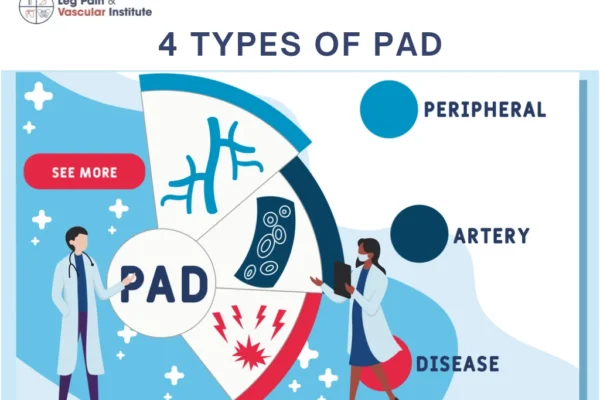
PAD can present differently from one person to another, ranging from mild disease with no symptoms to severe, limb-threatening conditions. Understanding these types of PAD helps guide appropriate care.
Asymptomatic PAD
Reduced blood flow is present, but no noticeable symptoms occur. Even without pain, this stage increases the risk of heart attack and stroke and often progresses over time.
Intermittent Claudication
The most common symptomatic form of PAD, intermittent claudication causes muscle pain, cramping, or tightness in the calves, thighs, or hips during walking or exercise. Symptoms typically improve with rest.
Critical Limb Ischemia (CLI)
A severe and advanced stage of PAD marked by significantly reduced blood flow. Patients may experience persistent pain at rest, non-healing ulcers, or skin breakdown. CLI requires urgent treatment to prevent infection or limb loss.
Acute Limb Ischemia
A sudden blockage of blood flow, often caused by a blood clot. This is a medical emergency that requires immediate intervention to restore circulation and prevent permanent tissue damage.
Early Warning Signs of PAD
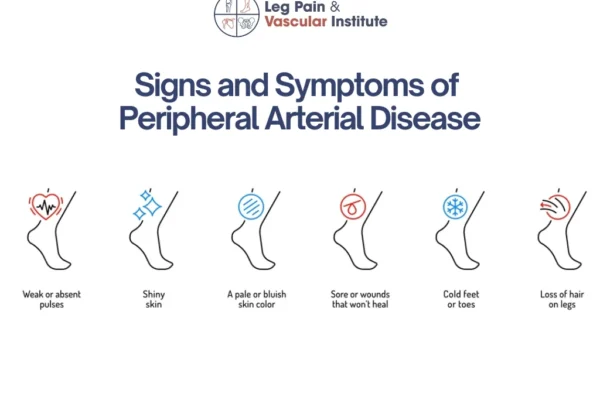
PAD often develops gradually, and early signs may be subtle or mistaken for normal aging or muscle fatigue. Paying attention to these warning signs can lead to earlier diagnosis and better outcomes:
- Leg pain, cramping, or fatigue during walking
- Coldness in one foot or lower leg compared to the other
- Weak or difficult-to-detect pulses in the feet
- Slow-healing cuts, sores, or ulcers on the legs or toes
- Changes in skin color, texture, or hair growth on the legs
Recognizing these signs early allows for prompt evaluation before symptoms become more severe.
Symptoms of Peripheral Arterial Disease
As PAD progresses, symptoms often become more persistent and begin to interfere with daily activities. Common symptoms include:
- Aching, burning, or heaviness in the legs
- Numbness, tingling, or weakness in the feet
- Shiny, thin, or tight skin on the lower legs
- Thickened or brittle toenails
- Foot or toe pain at rest, especially at night
Some individuals may still experience few or no symptoms, which is why routine vascular screening is especially important for patients with risk factors such as diabetes, smoking history, high blood pressure, or high cholesterol.
How Peripheral Arterial Disease Is Diagnosed
Accurate diagnosis is essential for determining the severity of PAD and creating an effective treatment plan. At Vascular and Vein Institute of the South, diagnosis typically includes:
Medical history and physical examination
Evaluation of symptoms, lifestyle factors, and cardiovascular risk, along with assessment of pulses and visible signs of poor circulation.
Ankle-Brachial Index (ABI)
A simple, non-invasive test that compares blood pressure in the ankles to blood pressure in the arms to assess circulation.
Vascular ultrasound
Uses sound waves to visualize blood flow and identify areas of narrowing or blockage within the arteries.
Advanced imaging (CT or MR angiography)
Provides detailed images of the arteries when intervention is being considered.
Comprehensive cardiovascular risk assessment
Identifies contributing factors and helps guide long-term disease management.
Peripheral Arterial Disease Treatment at Leg Pain and Vascular Institute
At Leg Pain and Vascular Institute, we take a comprehensive and personalized approach to treating peripheral arterial disease (PAD). Our focus is not only on relieving symptoms but also on addressing the underlying causes of poor circulation to help prevent future complications. Using modern, minimally invasive techniques, our experienced vascular specialists provide high-quality, patient-centered care for individuals throughout Houston and Webster, Texas.
We tailor each treatment plan based on the severity of PAD, overall health, and individual lifestyle factors, ensuring the most effective and least invasive options whenever possible.
- Advanced diagnostic testing
Accurate diagnosis is the foundation of effective treatment. We use state-of-the-art vascular imaging and circulation testing to precisely identify arterial blockages and determine the best course of care.
- Lifestyle and risk-factor management guidance
Managing risk factors such as smoking, diabetes, high blood pressure, and high cholesterol is essential for slowing disease progression. Our team provides clear guidance and support to help patients make sustainable lifestyle changes.
- Medication therapy to improve circulation
Medications may be prescribed to improve blood flow, manage symptoms, and reduce the risk of blood clots or cardiovascular events.
- Minimally invasive procedures
When necessary, we offer advanced procedures such as angioplasty and stenting to open narrowed arteries and restore healthy blood flow—often with shorter recovery times and less discomfort than traditional surgery.
- Ongoing follow-up and preventive care
Regular monitoring and follow-up care help ensure long-term success, reduce the risk of recurrence, and protect overall vascular health.
Our goal at Leg Pain and Vascular Institute is to relieve leg pain, restore mobility, and improve quality of life while safeguarding your long-term cardiovascular health through expert PAD care.
Take Charge of Your Leg Health Today
Peripheral arterial disease is a serious condition, but with early detection, proper treatment, and ongoing care, its progression can be managed and complications prevented. Recognizing the signs and symptoms, seeking timely diagnosis, and following a personalized treatment plan can make a significant difference in your mobility, comfort, and overall vascular health.
At Leg Pain and Vascular Institute, our team of specialists in Houston and Webster, Texas is dedicated to helping patients overcome leg pain, improve circulation, and regain confidence in their daily lives. Don’t ignore leg discomfort or changes in your lower extremities, early action can protect your legs and your heart.
Schedule a consultation today to get a comprehensive vascular evaluation and take the first step toward healthier, stronger legs.
Frequently Asked Questions
What are common signs of peripheral arterial disease?
Leg pain with walking, slow-healing foot wounds, and cold or numb feet are common signs of PAD.
Is peripheral arterial disease life-threatening?
PAD itself is not usually fatal, but it significantly increases the risk of heart attack and stroke if left untreated.
Can PAD be cured?
There is no cure, but PAD can be effectively managed with lifestyle changes, medication, and vascular procedures.
Does PAD cause leg swelling?
PAD does not typically cause swelling. Edema may occur if PAD is combined with venous disease or heart conditions.
Can PAD improve with treatment?
Yes. With proper care, symptoms can improve and disease progression can be slowed or stabilized.
This information is not a medical diagnosis. A consultation with Dr. Anwer will confirm your treatment options. Individual results may vary.