[et_pb_section fb_built=”1″ admin_label=”section” _builder_version=”4.16″ custom_padding=”15px|||||” global_colors_info=”{}” theme_builder_area=”post_content”][et_pb_row admin_label=”row” _builder_version=”4.27.4″ background_size=”initial” background_position=”top_left” background_repeat=”repeat” width=”100%” max_width=”985px” module_alignment=”left” custom_padding=”3px|||||” global_colors_info=”{}” theme_builder_area=”post_content”][et_pb_column type=”4_4″ _builder_version=”4.16″ custom_padding=”|||” global_colors_info=”{}” custom_padding__hover=”|||” theme_builder_area=”post_content”][et_pb_text admin_label=”Text” _builder_version=”4.27.5″ header_3_line_height=”1.4em” background_size=”initial” background_position=”top_left” background_repeat=”repeat” hover_enabled=”0″ global_colors_info=”{}” theme_builder_area=”post_content” sticky_enabled=”0″]
While some uterine fibroids can pass by undetected, others create severe symptoms. By recognizing common symptoms, you can stop allowing pain to control your daily life and take action to protect your health.
Signs You Might Have Uterine Fibroids and Why You Shouldn’t Ignore Them
Tired of brushing off painful cramps or heavy periods? Many women normalize discomfort that could be signaling something more specific: uterine fibroids. Understanding what fibroids are and recognizing their signs can be your first step toward finding relief through appropriate “uterine fibroid treatments near me.”
What Are Uterine Fibroids?
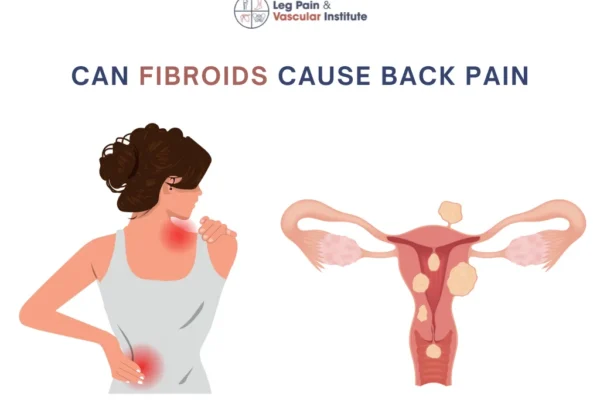
Uterine fibroids are non-cancerous growths that develop in or around the uterus. They can vary dramatically in size—from as small as a seed to as large as a grapefruit—and often grow slowly over years.
Some women may have a single fibroid while others develop multiple growths. Their location within the uterine wall makes a significant difference in which symptoms you might experience, and when it’s best to seek uterine fibroid treatment nearby. Some fibroids push inward toward the uterine cavity, while others grow outward toward surrounding organs, creating different pressure points and symptoms.
Common Signs You Might Have Fibroids
Abnormal Menstrual Bleeding
Heavy menstrual bleeding is perhaps the most recognizable sign of fibroids. If you’re changing tampons or pads more frequently than every two hours or passing large clots, this isn’t simply “having a heavy flow”—it could be fibroids. Many women don’t realize that bleeding lasting longer than seven days also falls outside the normal range.
Pelvic Pain
Pelvic pressure and pain represent another common signal. This can manifest as a constant feeling of fullness or pressure in your lower abdomen. Some women describe it as feeling like they’re in the early stages of pregnancy, with a persistent heaviness that doesn’t resolve with rest.
Reduced Bladder Functionality
Frequent urination, especially without drinking extra fluids, might surprise you as a fibroid symptom. When fibroids press against your bladder, they reduce its capacity and create urgency. Difficulty emptying your bladder completely can result from this same pressure.
Bowel Problems
Constipation and lower back pain often fly under the radar as fibroid indicators. Fibroids can press against your rectum or spine, causing bowel difficulties or persistent low back discomfort that worsens during your period but doesn’t fully disappear between cycles.
Fatigue
Unexplained fatigue may be your body’s response to anemia from heavy bleeding. If you’re constantly tired despite adequate sleep, fibroids might be the hidden culprit. Some women find themselves increasingly dependent on iron supplements without understanding why their iron levels keep dropping.
Painful Intercourse
Pain during intercourse, particularly in certain positions, represents another often-ignored sign. This discomfort occurs when fibroids alter the shape of the uterus or create pressure points that become aggravated during physical intimacy.
Any of these symptoms should prompt you to search for “uterine fibroid treatment near me.”
Why You Shouldn’t Ignore These Symptoms
Scheduling
Living with untreated fibroid symptoms can significantly impact your quality of life. Beyond the physical discomfort, the unpredictability of heavy bleeding may cause you to miss work, avoid social events, or limit physical activities. Many women report planning their entire lives around bathroom access and proximity to home during their periods.
Emotional Effects
The emotional toll of uterine fibroids often goes unacknowledged. Feeling unheard when describing symptoms to others or even healthcare providers can lead to frustration and isolation. You might begin to doubt your own experiences when told repeatedly that your symptoms are “just part of being a woman.”
Increased Health Conditions
Long-term heavy bleeding can lead to iron-deficiency anemia, which brings its own set of health complications including extreme fatigue, weakness, and impaired immune function. Your body cannot indefinitely compensate for consistent blood loss without consequences.
Starting Small
When exploring uterine fibroid treatment nearby, early conversations with healthcare providers allow for monitoring any changes over time. Fibroids often grow slowly, and understanding your baseline helps professionals track meaningful changes that might warrant intervention.
Knowledge empowers decision-making. Understanding your specific fibroid situation helps you participate actively in care discussions rather than feeling rushed into decisions during a crisis of symptoms.
Taking the Next Step
If several of these symptoms sound familiar, consider scheduling an appointment with Dr. Bilal Anwer, from the Leg Pain and Vascular Institute. He is a board-certified interventional radiologist whom specializes in treating women’s health. Before your visit, track your symptoms for at least two months, noting severity, timing, and duration. This information proves invaluable for accurate assessment.
Prepare specific questions about what diagnostic steps might help confirm whether fibroids are causing your symptoms. Common evaluations include ultrasound imaging and detailed medical history reviews focusing on your menstrual patterns.
Explore Treatment Options
Fibroids are incredibly common, yet their impact on women’s lives often remains underacknowledged. Don’t normalize discomfort or accept limitations to your daily activities as inevitable. Your body might be signaling something specific that deserves attention and care.
If symptoms described here feel familiar, exploring uterine fibroid embolization at the Leg Pain and Vascular Institute can open doors to improved quality of life. You deserve to understand what’s happening in your body and to know what choices are available for finding relief. Schedule an appointment today.
[/et_pb_text][/et_pb_column][/et_pb_row][/et_pb_section]
This information is not a medical diagnosis. A consultation with Dr. Anwer will confirm your treatment options. Individual results may vary.