[et_pb_section fb_built=”1″ _builder_version=”4.16″ global_colors_info=”{}”][et_pb_row _builder_version=”4.16″ background_size=”initial” background_position=”top_left” background_repeat=”repeat” global_colors_info=”{}”][et_pb_column type=”4_4″ _builder_version=”4.16″ custom_padding=”|||” global_colors_info=”{}” custom_padding__hover=”|||”][et_pb_text _builder_version=”4.16″ background_size=”initial” background_position=”top_left” background_repeat=”repeat” custom_padding=”||0px|||” global_colors_info=”{}”]
Peripheral arterial disease (PAD) affects millions of people, yet it often goes undiagnosed because its early signs can be subtle. PAD occurs when arteries that supply blood to your legs and feet become narrowed or blocked due to plaque buildup (atherosclerosis). Reduced blood flow can cause discomfort, changes in your skin, slow-healing wounds, and more.
Understanding both the signs and symptoms of PAD is crucial for early detection and treatment. Recognizing these changes can help prevent complications like chronic wounds, infections, or even limb loss.
If you want a complete overview of PAD, its causes, types, and treatments, check out our full guide here: What Is Peripheral Arterial Disease? Signs, Symptoms, and Treatment.
Signs of Peripheral Arterial Disease
Signs of peripheral arterial disease (PAD) are physical changes that can often be seen or felt, either by you or by a healthcare provider during an examination. These signs may appear gradually and are easy to overlook, especially in the early stages of the disease. Even if you are not experiencing significant pain, these visible changes can be early indicators that blood flow to your legs and feet is reduced and should not be ignored.
Leg Pain or Cramping During Activity
One of the most common and telling signs of PAD is leg pain or cramping that occurs during walking, climbing stairs, or other physical activity. This pain is often felt in the calves but can also affect the thighs, hips, or buttocks. Unlike normal muscle soreness or fatigue, this discomfort is caused by limited blood flow to the muscles. When you move, your muscles need more oxygen, but narrowed arteries cannot deliver enough blood to meet that demand. As a result, pain develops and typically eases when you stop and rest. Over time, this walking-related pain may begin sooner, last longer, and limit how far you can comfortably walk.
Coldness in One Leg or Foot
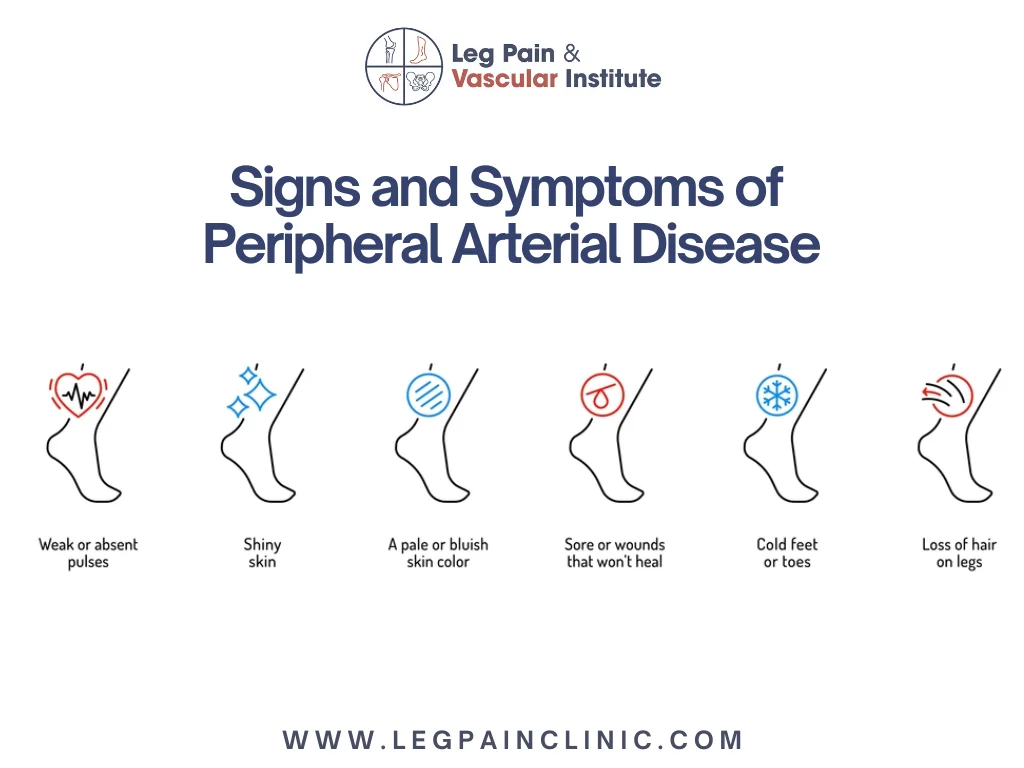
A noticeable temperature difference between one leg or foot and the other can be a clear sign of circulation problems. Reduced blood flow means less warm, oxygen-rich blood is reaching the affected area, causing it to feel cooler to the touch. This may be especially noticeable in the feet or toes and can persist even in warm environments. Consistent coldness in one limb should never be ignored, as it often signals an underlying arterial blockage.
Weak or Absent Pulses in the Legs or Feet
Healthy circulation produces a steady, easily detectable pulse in the legs and feet. In people with PAD, pulses may be weak or difficult to feel due to narrowed arteries. While this sign is usually identified during a medical exam, some individuals may notice a lack of throbbing or warmth in their feet. Reduced pulses indicate that blood is struggling to pass through blocked or hardened arteries, making this an important clue in diagnosing PAD.
Skin Changes
Changes in the appearance of the skin are another visible sign of peripheral arterial disease. Reduced blood flow can cause the skin on the legs or feet to appear pale, bluish, or shiny. Over time, the skin may become thin, dry, or fragile, making it more prone to injury. Hair loss on the legs and changes in toenail growth, such as brittle or thickened nails, are also common. These changes occur because the skin and hair follicles are not receiving the nutrients and oxygen they need to stay healthy.
Slow-Healing Wounds or Ulcers
Cuts, sores, or ulcers on the legs, feet, or toes that heal slowly, or do not heal at all, are among the most serious warning signs of PAD. Proper healing depends on good blood flow, which delivers oxygen and immune cells to damaged tissue. When circulation is poor, even minor injuries can take weeks to heal and may become infected. In advanced cases, non-healing wounds can lead to serious complications, including tissue damage and an increased risk of limb-threatening conditions.
Recognizing these signs early is critical. While they may seem mild at first, they often indicate an underlying circulation problem that can worsen without treatment. Paying attention to these physical changes and seeking timely evaluation can help prevent complications and protect long-term leg and vascular health.
Symptoms of Peripheral Arterial Disease
Symptoms of peripheral arterial disease (PAD) are the physical sensations and limitations that patients personally experience as a result of reduced blood flow to the legs and feet. These symptoms often develop slowly and may come and go at first, making them easy to dismiss. As circulation continues to decline, symptoms typically become more frequent, more intense, and more disruptive to daily life.
Aching, Burning, or Heaviness in the Legs
One of the most common symptoms of PAD is a deep, uncomfortable ache or burning sensation in the legs. Many patients describe their legs as feeling unusually heavy, tight, or weighed down. This discomfort often begins during walking, climbing stairs, or standing for extended periods and improves with rest. As PAD progresses, the pain may take longer to go away or occur even when sitting or lying down, signaling more advanced circulation problems.
Numbness or Tingling in the Feet
Reduced blood flow can affect the nerves in the feet and lower legs, leading to sensations such as numbness, tingling, or a pins-and-needles feeling. Some patients experience partial loss of sensation, making it difficult to feel temperature changes or minor injuries. This lack of sensation increases the risk of unnoticed cuts or sores, which can become serious when healing is impaired.
Pain in the Feet or Toes at Rest, Especially at Night
In advanced stages of PAD, pain may occur even without activity. Many patients notice aching or throbbing pain in the feet or toes while lying down, particularly at night. This happens because blood flow is further reduced when the legs are elevated. Some individuals find temporary relief by lowering their legs over the side of the bed, allowing gravity to help increase blood flow to the feet.
Muscle Fatigue or Cramping
People with PAD often experience rapid muscle fatigue or cramping during routine activities such as walking short distances, doing household chores, or standing for long periods. The muscles are not receiving enough oxygen to function efficiently, causing them to tire more quickly than expected. Over time, this can lead to reduced endurance and frequent rest breaks during normal activities.
Changes in Mobility or Activity Tolerance
As symptoms worsen, PAD can significantly limit mobility. Patients may find themselves walking shorter distances, avoiding physical activities, or planning their day around frequent rest periods. This gradual decline in activity tolerance can affect independence, overall health, and quality of life. In some cases, fear of pain may lead individuals to stop exercising altogether, which can further worsen circulation.
These symptoms should never be ignored, even if they seem mild or intermittent. Persistent or worsening leg discomfort, numbness, or fatigue may indicate advancing peripheral arterial disease and should be evaluated by a vascular specialist. Early diagnosis and treatment can help relieve symptoms, improve circulation, and preserve long-term leg health.
How Signs and Symptoms Differ
Recognizing the difference between signs and symptoms of peripheral arterial disease (PAD) can help with earlier diagnosis and timely treatment. Both provide important clues about reduced blood flow in the legs and feet.
Signs are physical changes that can be seen or measured, sometimes even before pain is felt. These may be noticed by you or during a medical exam and often go overlooked because they are not always uncomfortable.
Symptoms are what the patient personally experiences, such as pain, numbness, or fatigue. These sensations often appear during activity and may worsen as PAD progresses.
Even noticing one or two signs or symptoms is enough reason to seek evaluation from a vascular specialist.
[/et_pb_text][et_pb_pricing_tables _builder_version=”4.27.5″ _module_preset=”default” global_colors_info=”{}”][et_pb_pricing_table title=”Signs (Observable Changes)” header_background_color=”#ad635b” _builder_version=”4.27.5″ _module_preset=”default” global_colors_info=”{}” sticky_transition=”on”]
Pale, bluish, or shiny skin
Cold feet or one cold leg
Slow-healing wounds or ulcers
Hair loss on legs
Weak or absent leg pulses
[/et_pb_pricing_table][et_pb_pricing_table title=”Symptoms (What You Feel)” header_background_color=”#ad635b” _builder_version=”4.27.5″ _module_preset=”default” global_colors_info=”{}” sticky_transition=”on”]
Leg pain or cramping
Burning or heaviness in legs
Numbness or tingling
Pain at rest, especially at night
Muscle fatigue or weakness
[/et_pb_pricing_table][/et_pb_pricing_tables][et_pb_text _builder_version=”4.27.5″ _module_preset=”default” global_colors_info=”{}”]
When to Seek Medical Attention
If you experience any of these signs or symptoms, early evaluation is crucial. Untreated PAD can lead to serious complications such as chronic ulcers, infections, or even limb-threatening conditions. People with diabetes, high blood pressure, high cholesterol, or a history of smoking are at higher risk and should be particularly vigilant.
At Leg Pain and Vascular Institute, our vascular specialists in Houston and Webster, Texas offer advanced testing and personalized treatment plans to improve circulation, relieve pain, and protect long-term vascular health.
Take Action for Your Leg Health
Recognizing PAD early is the first step toward preventing complications and maintaining mobility. Don’t ignore leg discomfort, numbness, or slow-healing wounds, these could be early warning signs of peripheral arterial disease.
Schedule a consultation with Leg Pain and Vascular Institute today to get a comprehensive vascular evaluation and take control of your leg and cardiovascular health.
[/et_pb_text][/et_pb_column][/et_pb_row][/et_pb_section]
This information is not a medical diagnosis. A consultation with Dr. Anwer will confirm your treatment options. Individual results may vary.